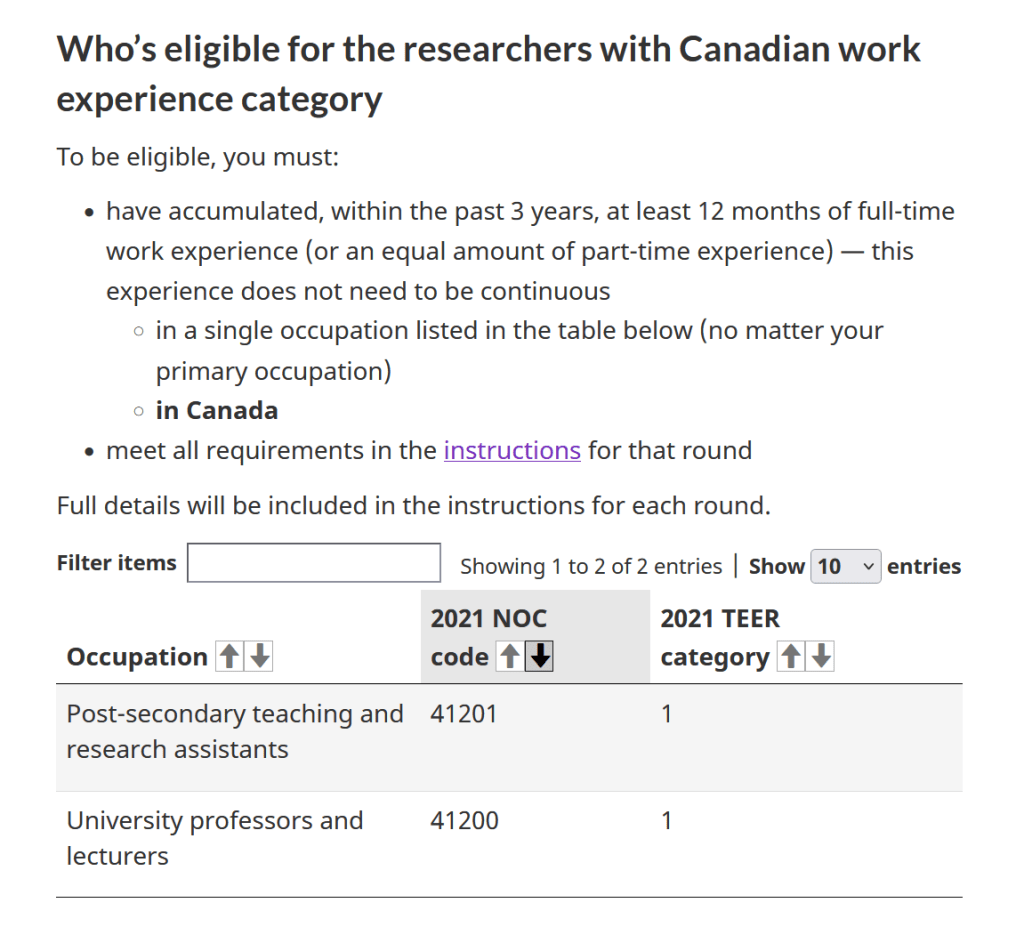
Under Canada’s category-based selection framework within Express Entry, one of the most structurally interesting additions is the Researchers with Canadian work experience category.
Unlike broad occupational categories such as healthcare or trades, this category is closely tied to the Canadian academic and research ecosystem, creating a potentially powerful pathway for graduate international students who accumulate qualifying research experience in Canada.
This analysis examines how master’s and PhD students could strategically position themselves within this category.

Category-based selection under Express Entry operates only after a candidate is already eligible under one of the three federal economic programs managed by Immigration, Refugees and Citizenship Canada:
- Canadian Experience Class (CEC)
- Federal Skilled Worker Program (FSW)
- Federal Skilled Trades Program (FST)
Only after entering the pool through one of these streams can a candidate be considered in a category-based round, such as the Researchers with Canadian work experience category.
Check IRCC website for the detailed requirements of each program, but basically:
-
CEC requires IN CANADA WORK EXPERIENCE, at least ONE YEAR, Within the last 3 years.
-
FSW requires IN CANADA OR FOREIGN EXPERIENCE, at least ONE YEAR or 1560 hours, within the last 10 years.
For most master’s and PhD students relying on research done during a study permit, FSW is the key gateway, because:
- Work during full-time studies does not count for CEC eligibility.
- It does not increase CRS Canadian work experience points.
- It may count toward FSW eligibility if it is paid, authorized, and meets NOC and hour requirements.
Below are FSW work experience requirements:
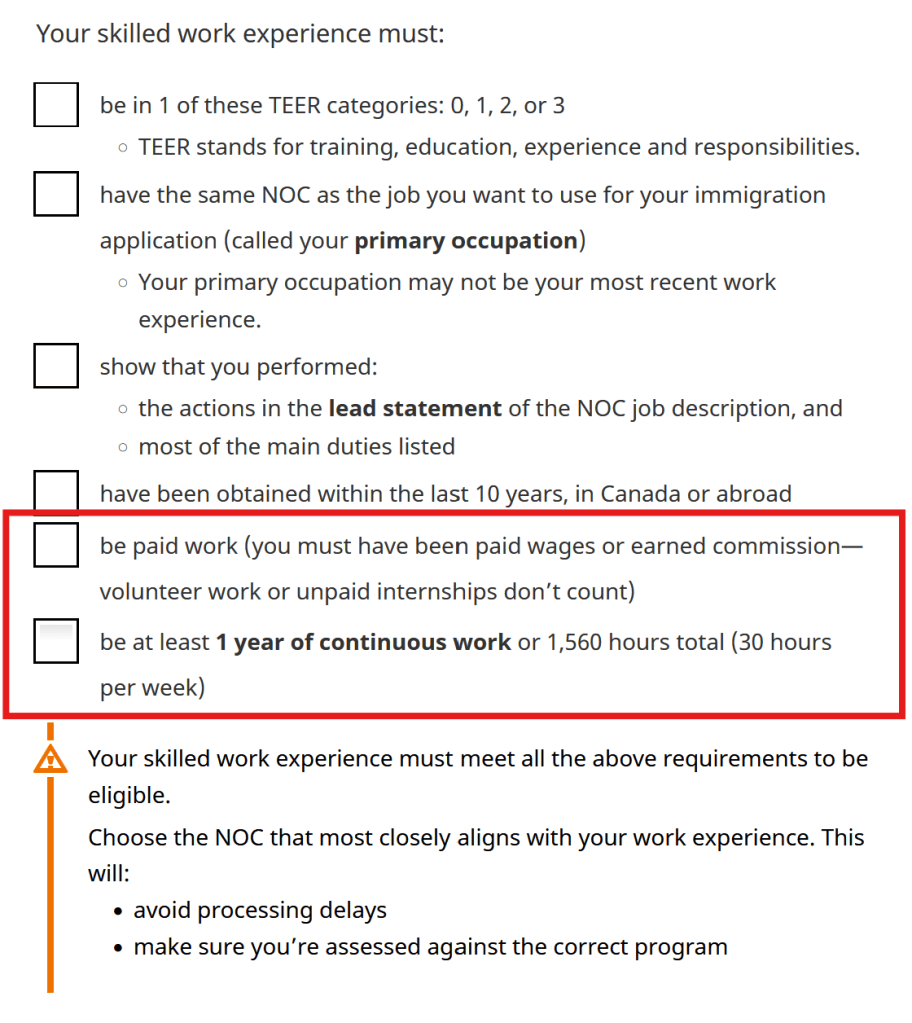
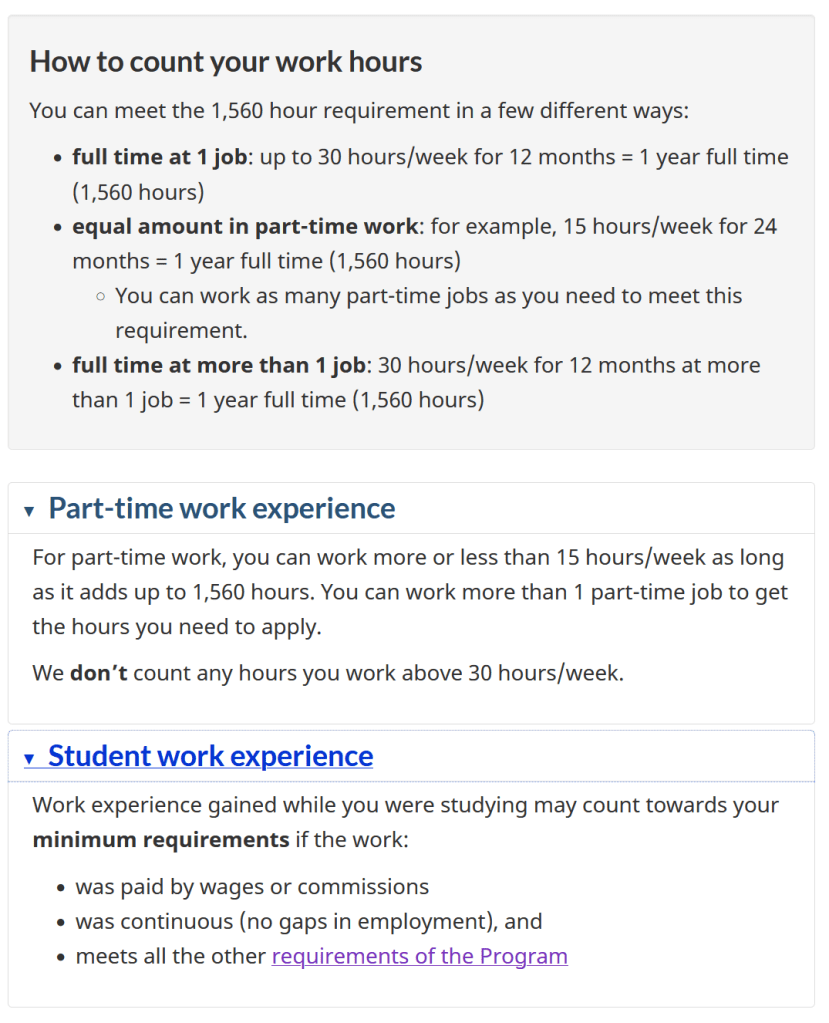

Once inside the pool, the Researchers with Canadian work experience category becomes relevant. Candidates who meet the category criteria are ranked by CRS within that category and may receive invitations in targeted draws, which could have lower cut-off scores than general draws.
For international PhD students in Canada, a T4A slip is a crucial document used to report "other income"—specifically scholarships, fellowships, bursaries, and research grants—to the Canada Revenue Agency (CRA).
T4 slips record income and deductions for employees with taxes withheld by the employer. T4A slips (Statement of Pension, Retirement, Annuity, and Other Income) report income for contractors, freelancers, or self-employed individuals where no tax was deducted. T4s indicate an employer-employee relationship, while T4As generally indicate self-employment or specific non-employment income.
You would want to have T4s to support your working hours, not T4As.

In Short
First filter: CEC / FSW / FST eligibility. Second filter: Category-specific requirements.
You must clear both layers before CRS ranking within a category even matters.