In ancient Athens, they had a concept called schole. It wasn't the passive "weekend" we have now, but was the active freedom to spend your day in a Socratic debate. To walk up to a "Wiseman" and risk your pride in a public pursuit of truth.
Fast forward to 2026. We’ve actually built a Socrates in a box. Large Language Models give us instant access to the collective brain of every philosopher who ever lived. But we aren’t using this digital teacher to step off the treadmill. We’re using it to run faster.
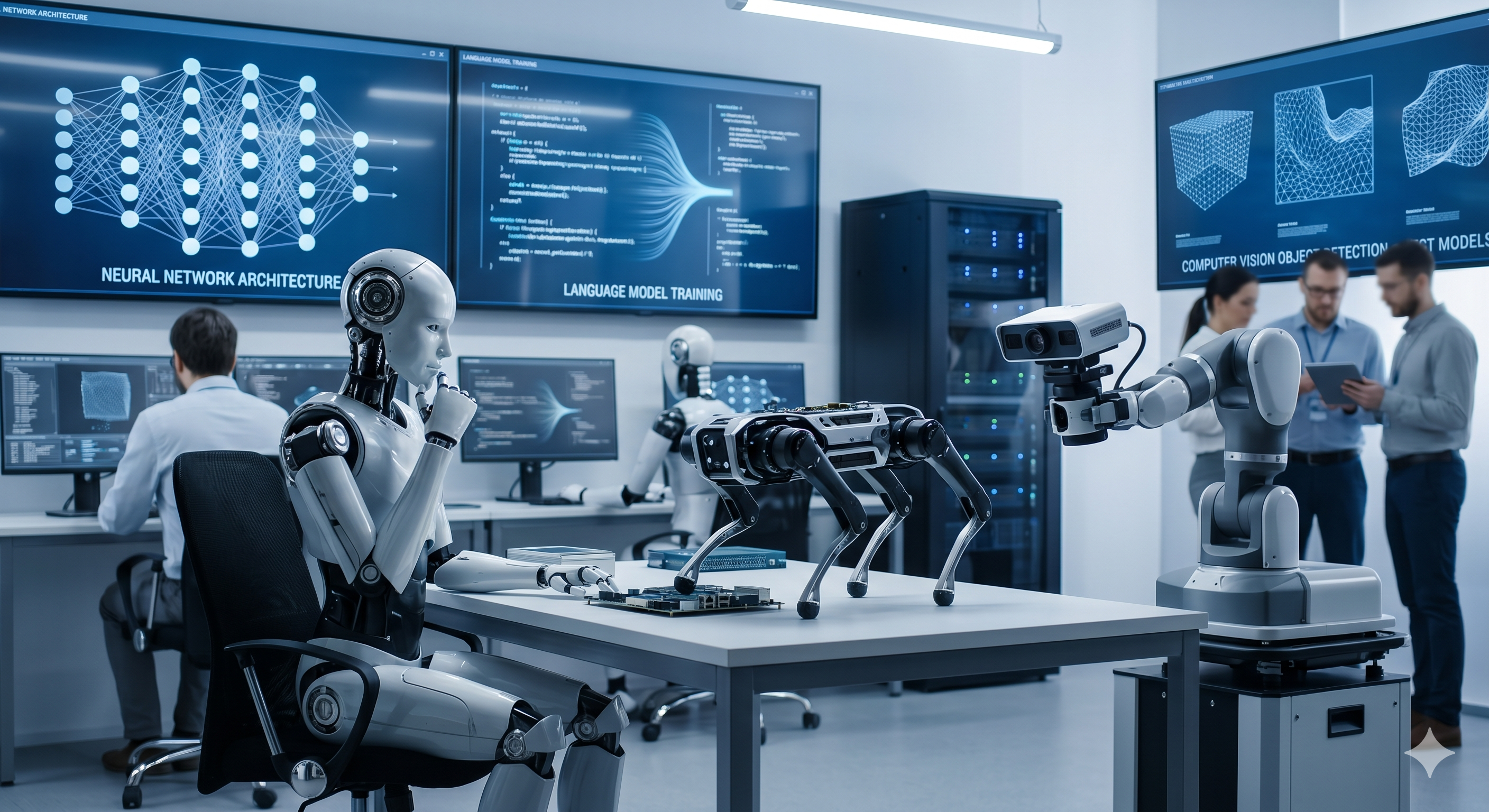
The Production Trap
We talk about AI as a "Production Advantage." We brag about how fast we can summarize, code, and churn out content. But we’ve become mice on a wheel. If AI saves you four hours, you don't get those four hours back for reflection. The global market just demands four more hours of even faster output.
The Great Cognitive Flattening, and …
The Industrial Revolution was about geography. Developed nations used machines to dominate everyone else. And that hierarchy brings manmade advantage: a mediocre programmer in Toronto earned 10x more than a brilliant one in Dhaka simply because of the geography of the market. But in 2026, the monopoly on "brain power" is dissolving. Production power is going global, and it’s hitting traditional borders like a tidal wave.
Now, the mediocre programmer in Toronto and the brilliant one in Dhaka are flattened into the same digital task-unit. But, wait, it’s still a transitional phase. The brilliant programmer isn't just competing with Toronto anymore; they are competing with a server farm that can run 10,000 brilliant agents simultaneously for the price of a single electricity bill. Now that we’ve united the mediocre programmer and brilliant programmer, we can finally say that this isn't just about money; it’s about agency. If we only see AI as a way to produce more, we end up selling our best human traits, judgment, empathy, ethics, back to ourselves as premium features owned by a few tech giants.
The New Luddism
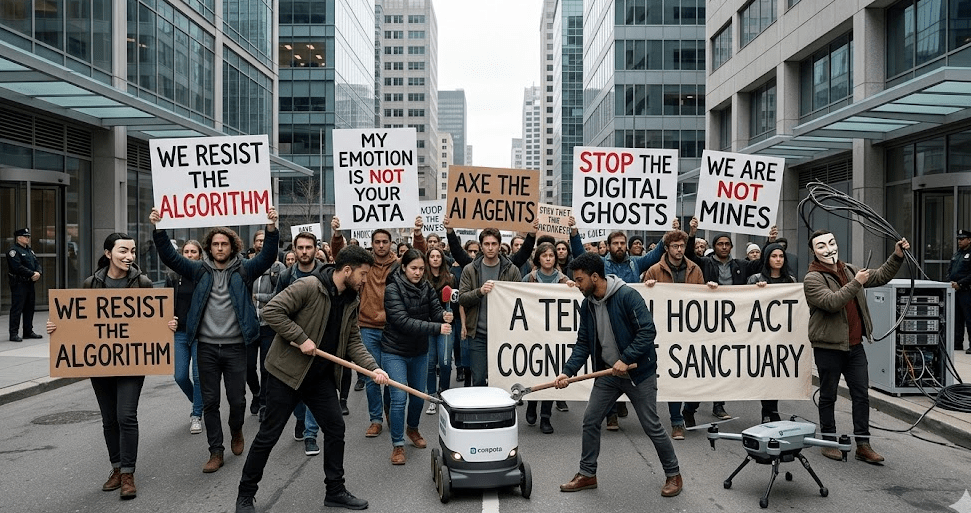
The survivors of the first Industrial Revolution weren't just Luddites breaking machines. They were the people who fought for the Ten-Hour Acts. They reclaimed their humanity by carving out a space that the factory whistle couldn't touch.
Our version of the Ten-Hour Act is a fight for "cognitive sanctuary." Real intellectual survival in 2026 requires a subtle subversion: use AI to get the production advantage, but then hide the time you save from the system. Why hand over your efficiency gains to the shareholders of a server farm? Reclaim that time for deep debate and actual thinking. Haha, I’m joking. There’s no escape.
The Bridge Beyond the Wall
AI shouldn't just exist to enrich a few sovereigns. Its best use is as a partner that forces you to ask "why"—a partner that isn't bound by local scripts or corporate profit margins.
We have the tools to build a global Lyceum. The question is: will we finally speak to one another as equals, or will we keep running ourselves to death on a wheel we built just to make the owners of the wheel richer?